
In the first few days after cataract surgery, patients often notice brighter colors, sharper road signs, and the haze that crept in over the years is finally gone. Then, they pick up a restaurant menu or glance at a text message and find the words are still blurry.
For many patients, needing reading glasses after cataract surgery is expected and rarely a sign of a problem. Cataract surgery replaces the eye’s clouded natural lens with a clear artificial lens, and the type of lens you receive shapes how well you see at each distance.
Keep reading to learn why near vision works the way it does after surgery and what options can reduce your reliance on readers.
Why Doesn’t Cataract Surgery Automatically Fix Near Vision?
Your eye’s natural lens once worked like an autofocus camera. When you were younger, tiny muscles inside the eye changed the shape of the lens, letting you shift focus from a distant street sign to a book in your hands in a fraction of a second. However, that flexibility fades with age. Presbyopia is the gradual loss of the eye’s ability to focus up close, and it usually becomes noticeable in your early to mid-40s as the natural lens stiffens. Most people have been living with presbyopia for years by the time a cataract forms.
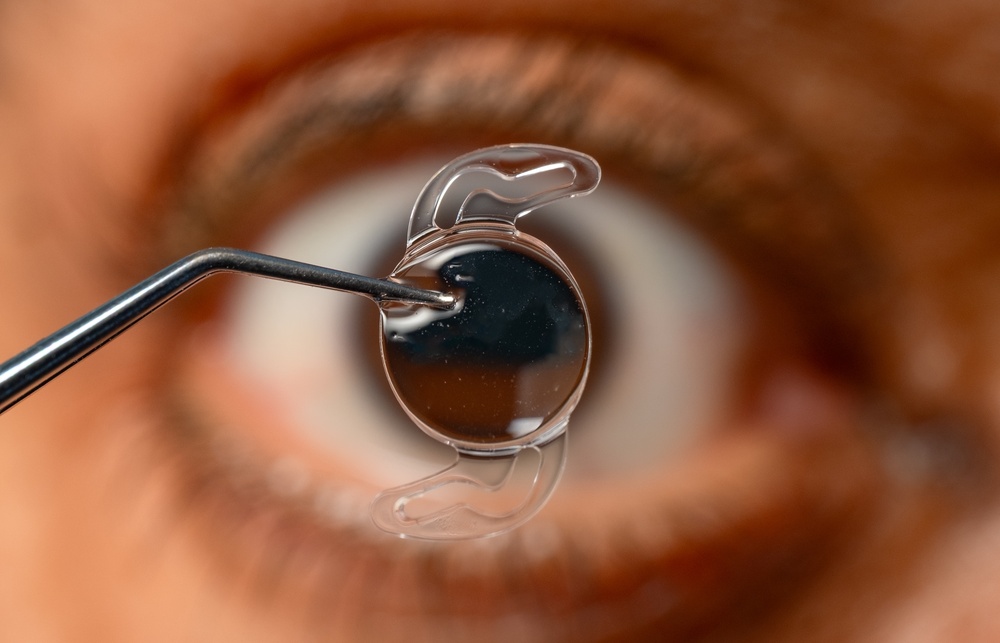
Cataract surgery removes the cloudy lens, but the replacement lens does not flex the way a young natural lens does. A standard intraocular lens (IOL) has a fixed focusing power, so it cannot adjust between near and far on its own. Unless your lens is designed to handle multiple distances, close-up tasks will still need some help if you choose a standard monofocal lens.
How Your Lens Choice Affects Reading Vision
The biggest factor in whether you need reading glasses after cataract surgery is the IOL you and your surgeon select before the procedure. Each lens type makes a different trade-off between distance, intermediate, and near vision.
Monofocal Lenses Focus at One Distance
A monofocal lens provides sharp vision at one set distance. Most patients have it set for distance, so driving, watching TV, and recognizing faces across a room are clear without glasses. Reading a book, threading a needle, or checking a phone still calls for readers.
Monofocal lenses are typically covered by Medicare and most insurance plans, and they deliver excellent image quality at one distance. Your surgeon can walk you through how a monofocal compares with other intraocular lens options based on your eye measurements and daily routine.
Some patients choose an approach called monovision, where one eye is set for distance and the other for near. It reduces dependence on readers for many people, though it takes some adjustment and does not feel comfortable for everyone. A trial with contact lenses before surgery can show whether it suits you.
What Premium Lenses Can and Cannot Do
Premium intraocular lenses are designed to expand the range of clear vision.
The Clareon PanOptix trifocal lens, for example, divides incoming light to provide focus at near, intermediate, and far distances, and many patients read comfortably without glasses after receiving it.
Extended depth of focus lenses, such as the Clareon Vivity, give clear distance and intermediate vision (think dashboards and computer screens). Patients with this lens may still want readers for small print or dim lighting.
Multifocal designs can also produce halos or glare around lights at night, which some people notice more than others.
No lens returns the eye to the focusing ability of a 25-year-old. Patients who know ahead of time which tasks may still need readers are far less likely to be surprised once they are home from surgery.

Other Reasons You Might Still Reach for Readers
Even with a carefully chosen lens, a few other factors can affect near vision after surgery.
- Residual Refractive Error: Pre-surgery measurements are highly precise, but healing can shift the final focus slightly and leave a small amount of nearsightedness, farsightedness, or astigmatism.
- Dry Eye: An uneven tear film blurs vision, and dry eye symptoms often flare in the weeks after surgery.
- Lighting and Print Size: Fine print in a dim room is hard for any eye to read, so even patients with premium lenses may keep a pair of readers nearby.
- Other Eye Conditions: Macular degeneration, diabetic retinopathy, or glaucoma can limit sharpness regardless of which lens is implanted.
Months or years later, some patients also develop clouding of the thin membrane that holds the new lens, called posterior capsule opacification. It can make vision hazy at all distances and is treated with a quick in-office laser procedure.
When Should You Get Reading Glasses After Cataract Surgery?
Your vision will continue to settle for several weeks while the eye heals. Your doctor will usually hold off on a final glasses prescription until follow-up visits confirm the eye has stabilized, which is often about a month after surgery.
The cataract surgery recovery timeline varies from person to person, and if both eyes need surgery, your doctor may wait until the second eye has healed as well.
In the meantime, inexpensive over-the-counter readers can bridge the gap. Once your prescription is final, custom glasses can correct any leftover astigmatism or differences between your two eyes, which drugstore readers cannot do.
Planning for the Vision You Want After Cataract Surgery
Needing reading glasses after cataract surgery usually comes down to presbyopia and the lens you choose, and you can plan for both.
Patients who share their reading habits, hobbies, and screen time with their surgeon before the procedure tend to get results that match their expectations.
The experienced cataract surgeons at Eye Care & Vision Associates take time to review lens options, eye measurements, and lifestyle goals with each patient. Deciding how glasses-free you want to be is one of the most useful parts of preparing for cataract surgery, since your lens choice is meant to last a lifetime.
Want to talk through how your lens choice will affect your reading vision? Schedule an appointment at Eye Care & Vision Associates in Buffalo, NY, online or by calling 716.631.EYES (3937) to discuss which option fits your daily life.