

Most people scheduled for cataract surgery focus on the procedure itself: how long it takes, what recovery looks like, and when they can get back to their normal routine. What catches many patients off guard is that they also have to choose the lens going into their eye, which is a choice that matters more than most people realize.
The intraocular lens (IOL) you select will affect how well you see at different distances for the rest of your life. For patients who want to reduce or eliminate their dependence on glasses after surgery, premium intraocular lenses offer options that a standard lens simply cannot.
Keep reading to learn what sets premium IOLs apart, what types are available, and how to decide whether upgrading makes sense for you.
What Is an Intraocular Lens?

The eye’s natural lens sits just behind the iris and is responsible for focusing light onto the retina. When cataracts develop, proteins in the lens begin to break down and clump together, causing the lens to cloud over. Vision gradually becomes hazy, colors look faded, and nighttime glare worsens. Cataract surgery corrects this by removing the clouded lens entirely and replacing it with a clear artificial one called an intraocular lens.
Every cataract surgery patient receives an IOL. The question is what kind. The lens implanted during surgery stays in the eye permanently, so the decision carries real long-term significance.
Standard vs. Premium IOLs: What’s the Difference?
A standard IOL, also called a monofocal lens, corrects vision at a single focal distance, typically for seeing clearly far away. After surgery with a monofocal lens, most patients still need reading glasses for up-close tasks and may need glasses for intermediate distances as well.
Standard IOLs are generally covered by Medicare and most insurance plans as part of cataract surgery.
Premium IOLs are more advanced lenses designed to address a broader range of vision needs. Depending on the type, they can correct vision at multiple distances simultaneously, compensate for astigmatism, or provide a continuous range of focus with reduced visual disturbances. They typically involve an out-of-pocket upgrade fee beyond what insurance covers, but for patients who want greater independence from glasses, the added cost is often worth a close look.
Types of Premium Intraocular Lenses
Not all premium IOLs work the same way. Each type is designed to address a different vision challenge, and the right choice depends on what you want your vision to look like after surgery.
Multifocal IOLs

Multifocal IOLs use optical zones built into the lens to allow the eye to focus at near, intermediate, and far distances. Many patients who choose a multifocal lens find they can read, use a computer, and drive without needing glasses at all. They tend to be a strong fit for active patients who want the most glasses-free experience possible after surgery.
Extended Depth of Focus (EDOF) IOLs
Extended depth of focus lenses, such as the Clareon Vivity available through Eye Care & Vision Associates, take a different approach. Rather than creating distinct focal points, they extend the range of clear vision across a continuous span, which can reduce the halos and glare that some patients notice with multifocal lenses. EDOF lenses typically deliver excellent distance and intermediate vision, though some patients may still need glasses for small print.
Toric IOLs
Toric IOLs are designed for patients who have astigmatism. Astigmatism occurs when the cornea is not perfectly round, causing light to focus at two different points instead of one and producing blurry or distorted vision. A standard IOL does not correct this. A toric IOL is shaped to realign the way light focuses in the eye, correcting astigmatism alongside the cataract. Patients who skip a toric lens and have significant astigmatism will likely still need glasses after surgery to see clearly at any distance.
Accommodating IOLs
Accommodating IOLs are designed to flex in response to the eye’s natural muscle movements, shifting slightly forward or backward to change focus between near and far objects. The goal is to mimic the behavior of a young, healthy natural lens. Results can vary depending on individual eye anatomy, and this category continues to evolve as lens technology advances.
The full range of IOL options available at Eye Care & Vision Associates includes the Clareon PanOptix trifocal lens, which was the first trifocal IOL approved by the FDA and remains one of the most widely used premium lenses for patients seeking clear vision at all three focal distances.
How to Know If a Premium IOL Is Right for You
The right lens depends on how you use your eyes every day. A patient who spends hours at a computer and reads before bed has different visual priorities than someone who mostly wants sharp distance vision for outdoor activities. Before recommending a lens, your surgeon will ask about your lifestyle, your goals, and any vision problems you have beyond the cataract.
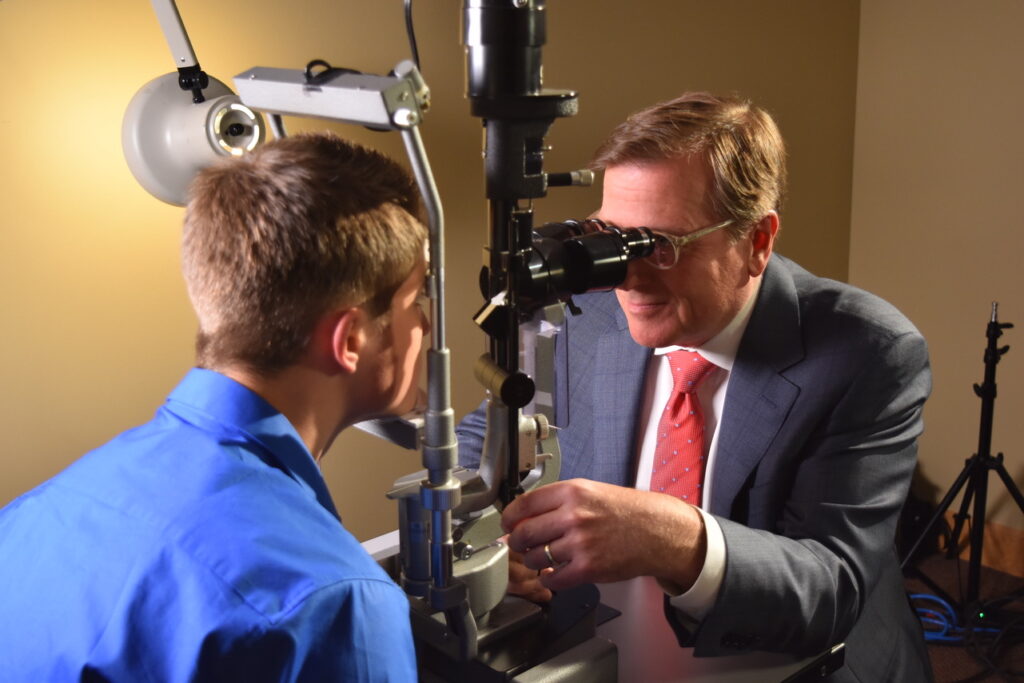
A few key factors tend to shape the conversation:
- Presence of astigmatism: If your cornea has an irregular shape, a toric IOL is likely the most practical path to clear vision without glasses after surgery.
- Desired range of vision: Patients who want to reduce their reliance on glasses across multiple distances are typically the best candidates for multifocal or EDOF lenses.
- Sensitivity to visual disturbances: Some patients find halos and glare from multifocal lenses bothersome, particularly at night. An EDOF lens may be a better fit in those cases.
- Overall eye health: Certain corneal conditions, macular issues, or other retinal problems can affect how well a premium IOL performs. Your surgeon will evaluate your eye health before making a recommendation.
A thorough pre-surgical exam and honest conversation with your doctor will clarify whether a premium lens makes sense for your situation.
Making the Right Lens Decision for Your Vision
Choosing the right lens for cataract surgery is not a one-size-fits-all decision. Premium intraocular lenses can significantly reduce the need for glasses after surgery, but the best option for each patient comes down to their vision goals, eye health, and daily lifestyle. Patients who go into surgery with clear expectations and a lens matched to their needs tend to be the most satisfied with their results.
The experienced surgical team at Eye Care & Vision Associates works closely with each patient to evaluate which IOL is likely to deliver the best outcome. Getting that guidance early in the process makes the decision far less overwhelming.
Ready to discuss your IOL options before cataract surgery? Schedule an appointment at Eye Care & Vision Associates in Buffalo, NY, online or by calling 716.631.EYES (3937) to talk with our experienced surgical team about which lens is right for you.