
Macular Degeneration
Macular degeneration is the breakdown or loss of function of the cells responsible for vision in the macula. The macula is the small, central area of the retina responsible for reading and seeing fine detail. It is the part of the retina used when one attempts to thread a needle or read the phone book. Macular degeneration does not affect the peripheral vision, however. Thus, even in the most severe cases, peripheral or “side” vision can remain essentially normal.
View Video:
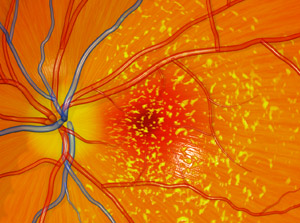
Age-Related Macular Degeneration, Dry Type (Dry AMD)
View Video:
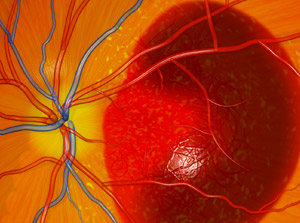
Age-Related Macular Degeneration, Wet Type (Wet AMD)
At Eye Care & Vision Associates, we are proud to offer Valeda Light Therapy, the first FDA-authorized treatment shown in clinical trials to improve vision for people with early to intermediate dry age-related macular degeneration (AMD) for our patients in Western New York.
What Causes Macular Degeneration?
Macular degeneration happens as part of the body’s normal aging process. Researchers are still studying exactly why it becomes visually significant in some individuals but not others, although there does appear to be an inheritance pattern.
In macular degeneration, deposits of drusen (a protein and lipid material) begin to accumulate in the macula and cause death of the light-absorbing cells. If this continues without the formation of new blood vessels, it is called “dry” macular degeneration. If blood vessels form from the structure beneath the retina, it becomes the “wet” type of macular degeneration. Although both can cause severe vision loss, the wet form is less common and usually more problematic.
Macular Degeneration Symptoms
Macular degeneration can cause different symptoms in different people, ranging from no symptoms to severe central vision loss in both eyes. However, it most commonly causes a dark or empty area in the center of vision in one or both eyes, distorted straight lines or edges, or blurry words on a page.
Macular Degeneration Treatment
Treatment for macular degeneration depends on which type you have and how far it has progressed. Our medical retina team will use a detailed exam and advanced retinal imaging to determine the right approach for your eyes.
Valeda Light Therapy for Dry AMD
For years, a dry AMD diagnosis meant eye vitamins, regular monitoring, and waiting to see how much vision would change. Valeda offers a new option.
The Valeda Light Delivery System uses photobiomodulation, a gentle, non-invasive light therapy that helps retinal cells produce energy more efficiently, clear waste, and reduce inflammation.
In the LIGHTSITE III clinical trial, patients with early to intermediate dry AMD who were treated with Valeda gained an average of about one line on the eye chart from their starting vision and were significantly less likely to progress to geographic atrophy, an advanced stage of dry AMD, than patients who received a placebo treatment. An extension study found vision gains lasted up to 4.5 years in many patients.
Valeda treatment is quick and comfortable:
- There are no injections, no surgery, and nothing touches the eye
- Each session takes only a few minutes per eye
- No dilation or recovery time is needed, so you can drive yourself home
- An initial series of nine sessions per eye is completed over three to five weeks, followed by maintenance visits, usually every four months
Valeda is designed for people with early to intermediate dry AMD who still have central vision to protect. It is not intended for wet AMD, advanced geographic atrophy, or people with certain light-sensitive conditions such as epilepsy.
Eye Vitamins
Large clinical studies have shown that a specific high-dose combination of vitamin C, vitamin E, zinc, copper, lutein, and zeaxanthin can slow the progression of intermediate dry AMD to advanced stages. These supplements have not been shown to benefit people with no or very early macular degeneration, and they do not restore vision that has already been lost. Your doctor can tell you whether eye vitamins make sense for you and may recommend them alongside Valeda.
Treatment for Wet AMD
Wet AMD requires prompt treatment to limit damage from leaking blood vessels. Your retina specialist will discuss the treatment options best suited to your condition and how often you will need to be seen.
Living Well With Macular Degeneration
Because macular degeneration does not affect peripheral vision, people with significant central vision loss still have useful vision from the sides. Often this is enough to continue many favorite activities with the help of magnifiers, electronic magnification devices, large-print materials, and talking or voice-enabled technology.
Macular degeneration is a leading cause of vision loss in the United States, but a diagnosis today comes with more options than ever before. Early detection, regular monitoring, and new treatments like Valeda can help you protect your central vision and keep doing the things you love.