
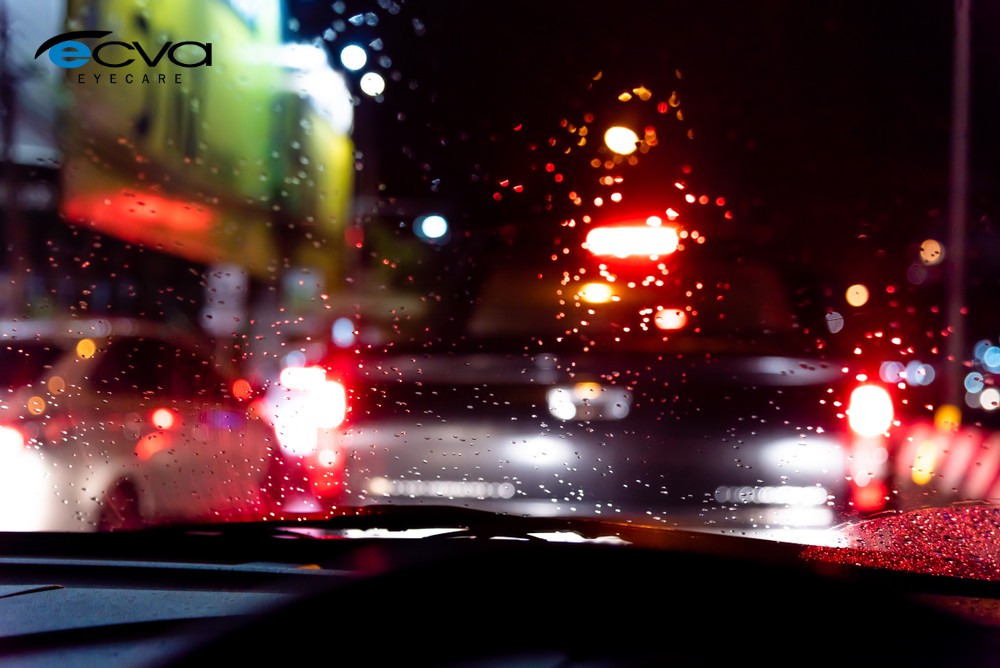
Driving after dark used to feel routine. Now, oncoming headlights seem blinding, street signs are hard to read until you’re almost on top of them, and pulling into an unlit parking lot requires more caution than it once did. For many people, these changes come on gradually, which makes it easy to chalk them up to getting older and leave it at that.
Night vision problems are common, but common doesn’t mean inevitable or untreatable. Several eye conditions, some correctable and some requiring ongoing management, can affect how well you see in low-light environments. Keep reading to learn what those conditions are, how they affect your vision after dark, and when an eye exam is the right next step.
What Is Night Blindness?
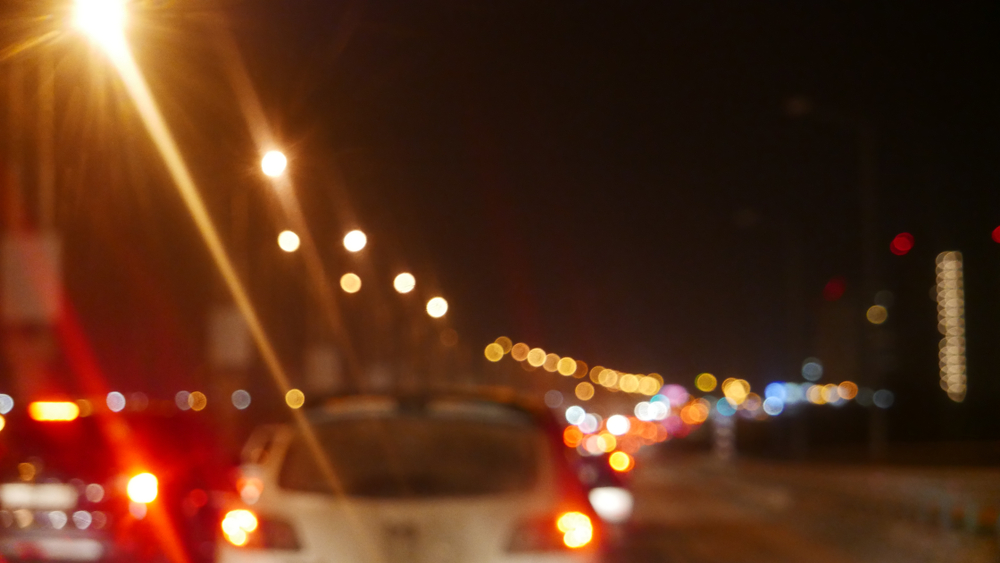
Night blindness, medically known as nyctalopia, refers to reduced vision in dim or dark conditions. The term is a bit misleading. It doesn’t mean total blindness at night. Instead, people with night blindness have difficulty seeing clearly in environments where light is limited, and they often struggle more than others when transitioning from a bright space into a darker one.
Sometimes, the root of the problem can involve the eye’s rod cells. Rods are the photoreceptors responsible for detecting light at low levels, and they’re concentrated in the peripheral retina. When rod cell function is disrupted by disease, nutrient deficiency, or structural changes in the eye, night blindness and trouble seeing at night can follow.
However, night blindness is a symptom, not a diagnosis in itself, which is why identifying the underlying cause matters. Since many eye conditions can cause this symptom, it’s important to visit your eye doctor to find the root cause.
Cataracts and Night Vision
Cataracts are one of the most common reasons people notice their night vision declining. As the eye’s natural lens becomes cloudy, it scatters incoming light rather than focusing it cleanly onto the retina. In bright daylight, that scattering is inconvenient. In low-light conditions, it becomes far more disruptive.
The symptoms tend to be specific. Headlights on oncoming vehicles may appear star-shaped or surrounded by halos. Signs and lane markings are harder to distinguish. Adjusting from a well-lit interior to a dark parking lot takes noticeably longer than it used to.
Many patients first become aware of their cataracts through these nighttime experiences, even before daytime vision feels meaningfully affected. The early warning signs of cataracts often appear subtly, and night driving difficulties are frequently among the first.
For patients with cataracts, the point where night driving becomes genuinely unsafe is not always obvious. A gradual worsening can make it difficult to recognize how much has changed over time.
Knowing when cataract-related night vision changes warrant stopping night driving is an important safety conversation, and one that an eye care provider can help guide. Cataract removal surgery replaces the cloudy lens with a clear artificial one, and for many patients, night vision improves noticeably after recovery.
Glaucoma’s Effect on Low-Light Vision
Glaucoma affects night vision in a different way than cataracts do.
The disease causes progressive damage to the optic nerve, and peripheral vision is typically the first to go. Since rod cells are densest in the peripheral retina, the loss of peripheral vision directly affects low-light performance. Even in early stages, some patients notice that seeing in dim environments feels less reliable than it once did. Vision loss from glaucoma is permanent, which means regular eye exams are the most reliable way to catch it before meaningful damage accumulates.
Retinal Conditions That Affect Night Sight
Retinitis Pigmentosa

Retinitis pigmentosa (RP) is a genetic condition that causes progressive degeneration of the rod and cone photoreceptors in the retina. Night blindness is often the earliest symptom patients notice, sometimes appearing in childhood or early adulthood, long before central vision is affected. Peripheral vision loss develops alongside it, gradually narrowing the visual field over time. There is currently no cure for RP, though ongoing research continues to explore gene therapy and other approaches. An accurate diagnosis allows patients to plan appropriately and access low-vision support resources.
Macular Degeneration
Age-related macular degeneration (AMD) primarily targets the central vision needed for reading, recognizing faces, and other detail-oriented tasks. However, advanced AMD can reduce overall macular degeneration and retinal function in ways that affect low-light visual performance as well. Patients with AMD often need more ambient light to see comfortably at night and may find dimly lit environments more disorienting. While AMD doesn’t cause night blindness in the classic sense, it can compound existing low-light difficulties, particularly in patients who already have age-related lens changes.
Other Factors Worth Considering
Not every case of poor night vision traces back to a single, diagnosable condition. Several contributing factors can affect how well the eyes perform after dark.
Vitamin A deficiency is a well-established cause of night blindness. Rod cells require vitamin A to produce rhodopsin, the photopigment that enables low-light detection. In developed countries, severe deficiency is uncommon, but mild insufficiency can still affect visual performance.
Uncorrected refractive errors, particularly myopia, can make night vision worse. The pupil dilates in low light, which increases the effect of uncorrected blur. Many patients who feel their night vision is unusually poor are actually dealing with an outdated glasses or contact lens prescription.
Diabetes is another consideration. Diabetic eye care involves monitoring how elevated blood sugar affects retinal blood vessels over time. Diabetic retinopathy can reduce contrast sensitivity and fine detail vision, both of which matter for low-light performance. Certain medications, including some antihistamines and blood pressure drugs, may also affect pupil response and night vision as a side effect.
When to Stop Guessing and Get Checked
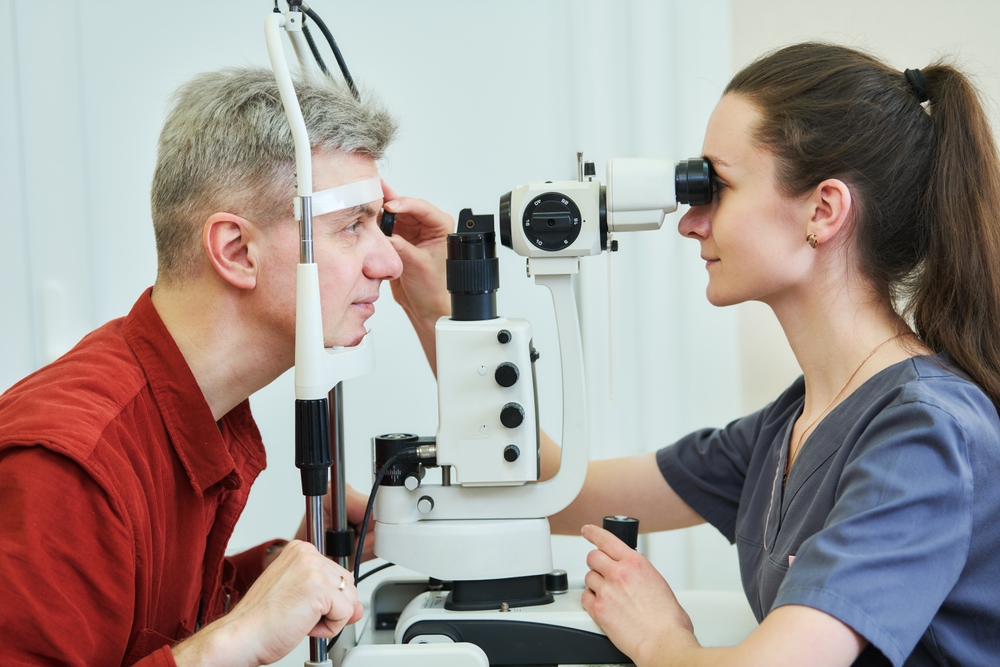
Declining night vision has real causes, and most of them are identifiable through a comprehensive eye examination. Some, like cataracts or a refractive error, are directly treatable. Others, like glaucoma or diabetic retinopathy, can be managed more effectively when caught early. The experienced team at Eye Care & Vision Associates evaluates the full picture, from the clarity of the lens to the health of the retina and optic nerve, to determine what’s actually behind your symptoms.
Accepting poor night vision as a normal part of aging means potentially missing a condition that could be addressed before it progresses further.
Noticing changes in your night vision? Schedule an appointment at Eye Care & Vision Associates in Buffalo, NY, online or by calling 716.631.EYES (3937) to find out what’s behind it.